Nature
 PUBLISHED




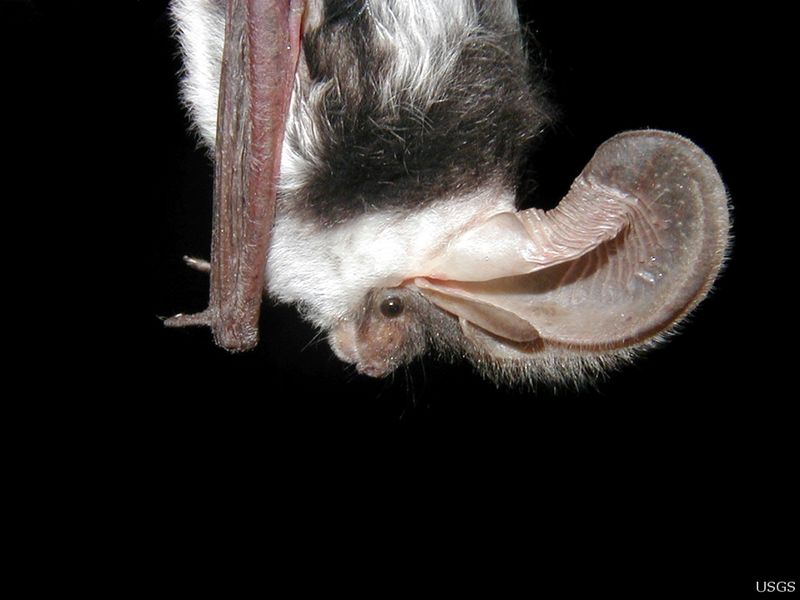
An adorable discovery published in the journal Frontiers in Ecology and Evolution has revealed how greater sac-winged bat moms use baby talk to communicate with their pups. As the babies are developing and working on their vocalizations, the mother will respond in a way that is unique to their pups, potentially providing positive feedback for the newborn.
Greater sac-winged bats (Saccopteryx bilineata) are common in Central and South America. They’re known for their complex vocalizations used to communicate territories and courtships, with females calling the shots when it comes to selecting mates. It’s thought this choosiness of females was the driving force for the increased complexity of male calls.
S. bilineata pups begin working on their vocalizations during the first three months of their life, babbling in a way comparable to human babies. As they work on their speech their mothers respond to them using a different pitch to the vocalizations they use when communicating with adult bats. This pup-directed speech pattern appeared to be unique to females as while male bats also communicated with pups, they did it in a way that reflected the “vocal signature” of their social group.

"Pup isolation calls are acoustically more similar to those of males from the same social group than to those of other males," said Mirjam Knörnschild, STRI research associate and co-author of the paper in a statement. "These results suggest that adult male vocalizations may serve as guidance for the development of group signatures in pup calls."
Baby talk in humans is effective in engaging with infants as they’re more easily drawn to language which is higher in pitch. This helps them learn, and so it’s likely the pup-directed vocalizations among these bats benefit the babies in the same way. This is the first time this kind of baby talk has been observed in bats, posing an interesting topic for further investigation to better understand the complexity of communication in bats.
"These results show that social feedback is important during vocal development, not only in humans but also in other vocal-learning species like Saccopteryx bilineata," said Ahana Fernandez, who conducted this research as part of her doctoral thesis at the Free University Berlin. "I believe that bats are a very promising taxon to investigate key shared features of language, such as the vocal learning ability, and that this study will inspire further studies in the biolinguistics field."