Space and Physics
 PUBLISHED


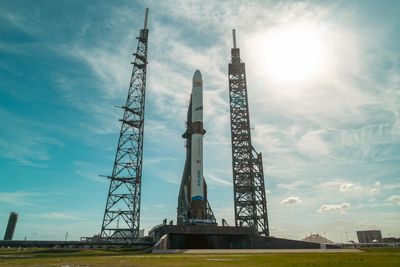


It's been an exciting week. On Tuesday, NASA announced that Jeff Bezos’ Blue Origin had won the contract to deliver the first payload of its Moon base later this year in an ambitious timeline. On Thursday, Blue Origin’s New Glenn rocket, the rocket due to deliver said payload, exploded on the launchpad during a scheduled prelaunch hotfire test.
The rest of this article is behind a paywall. Please sign in or subscribe to access the full content.The launchpad at the Kennedy Space Center, where the test was taking place, was also destroyed by the explosion. Blue Origin confirmed that there were no reported casualties in a post on X. "We experienced an anomaly during today's hotfire test. All personnel have been accounted for. We will provide updates as we learn more," they wrote.
The explosion was so bright that an orange glow was visible in the sky as far as Fort Pierce, 185 kilometers (115 miles) to the south of Cape Canaveral. This "anomaly" could set back the timeline for multiple missions, as it was due to be the rocket used to launch landers for the lunar base and to take astronauts to the lunar surface for Artemis V.
New Glenn is Blue Origin's most powerful rocket. On Tuesday, Blue Origin was awarded a $188 million contract to deliver rovers and drones to the Moon for NASA's Moon Base I mission, where it is due to test its Blue Moon Mark I Endurance lander. This would also deliver several of NASA's scientific payloads to the lunar South Pole.
This Blue Moon lander is not human-graded, but a different version will be used by Artemis crews to go from lunar orbit to the surface of the Moon and back for Artemis V in 2030. This explosion is a major setback for Blue Origin and for NASA’s plans.
“All personnel are accounted for and safe. It’s too early to know the root cause, but we’re already working to find it.," Jeff Bezos said in a tweet. "Very rough day, but we’ll rebuild whatever needs rebuilding and get back to flying. It’s worth it.”
What does this mean for our return to the Moon?
The question everyone is wondering is what this will mean for the return of humans to the Moon. The Artemis program, created during the first Trump presidency, relies heavily on private companies, not NASA, to provide spacesuits, landers, launchers, payloads, and infrastructure to get humans back to the Moon and build a permanent outpost.
The program has been plagued with delays; the Artemis III mission, which was supposed to land on the Moon next year, has been repurposed into a low-Earth orbit rendezvous between NASA’s Orion spacecraft and the two human landing systems the agency chose to partner with: Blue Origin's Blue Moon and SpaceX’s Starship.
Starship’s latest test was partially successful, but the explosion of its rocket midair led the US Federal Aviation Authority to temporarily ground it this week. Artemis III was scheduled for mid-2027, before being pushed to late 2027. The repercussions of both these explosions on the Moon program remain unknown for now.
“Spaceflight is unforgiving, and developing new heavy-lift launch capability is extraordinarily difficult. We will work with our partners to support a thorough investigation of this anomaly, assess near-term mission impacts, and get back to launching rockets,” NASA Administrator Jared Isaacman said in a tweet.
“We will provide information on any impacts to the Artemis and Moon Base programs as it becomes available.”