Nature
 PUBLISHED
 1
1


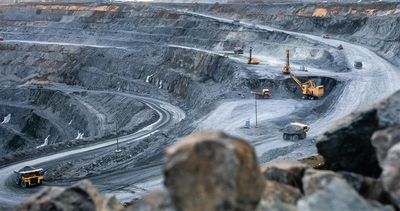


China has struck gold — literally — after geologists discovered an estimated $83 billion worth of gold in central China's Hunan Province, though accessing the underground deposit might be easier said than done.
The Geological Bureau of Hunan Province announced their geologists have detected over 40 gold veins with a reserve of 300 tonnes of gold at a depth of 2,000 meters (6,562 feet) beneath the Wangu gold field in Pingjiang County, according to Xinhua Chinese state media.
They estimate that further deposits will be found at depths of 3,000 meters (9,843 feet), yielding a total of 1,000 tonnes. If accurate, the deposit could be worth up to 600 billion yuan ($83 billion).
"Many drilled rock cores showed visible gold," Chen Rulin, an ore-prospecting expert at the bureau, told Xinhua.
However, just because gold deposits are there doesn’t mean it will be easy to obtain. Due to various economic and geological factors, just 10 percent of gold deposits on the planet are viable for mining.
Then again, China has the know-how and experience to make things happen. The East Asian giant is already the world’s biggest producer of gold, just behind Russia and Australia. In fact, most of the world’s excavated gold – enough to make a solid 23 by 23-meter (75 by 75-foot) cube – has been unearthed from those three nations.
One of the main reasons China has so much gold within its borders comes down to its geology. The large land mass sits across the junctions of multiple tectonic plates, leading to significant geological activity. The activity generates the conditions needed for gold deposits to form, such as hydrothermal systems where gold-bearing fluids concentrate and gather in veins.
Along with domestic deposits, China controls gold mining operations across parts of Africa, another part of the world that’s relatively abundant in the metal thanks to its unique geology.
Gold is a valuable metal, not just because of its use in jewelry, fancy ornaments, and monetary systems. It also serves as an essential material used in computers, communications equipment, spacecraft, jet aircraft engines, and other technological equipment.
It’s been speculated that China has recently been buying up gold, plus expanding its mining ventures, as a way to brace for global instability and reduce its dependency on the US dollar.
It can be a strange idea to grapple with, but many of the giant geopolitical tensions and economic dynamics of the modern world are still ultimately shaped by the geology of our planet and how we choose to manage it.