Nature
 PUBLISHED
 1
1


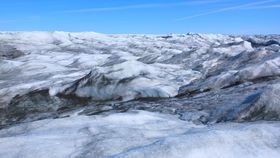


Some 700 million years ago, the Earth experienced several rounds of the most unusual climates in its history. Known as Snowball Earth, these events made recent ice ages look like a mild frost. Debate rages as to what started these deep freezes and what broke the planet out of them. New research suggests the speed with which conditions changed could be as important as the initiating temperatures.
Without enough sunlight, we would expect the Earth to turn into an ice world. However, MIT graduate student Constantin Arnscheidt has put an unexpected spin on this. It's not necessary for the amount of radiation captured to fall below a specified level, Arnscheidt claims. Instead, a sufficiently rapid reduction could also do the trick, even if the endpoint was warm enough to keep the planet unfrozen had the transition been slower.
Many forces could serve to cool the Earth. The Sun itself might dim or volcanoes could fill the skies with reflective sulfur dioxide. Any such reduction would initiate feedback effects. Some of these, such as reduced weathering of rocks, would counteract the cooling. Others, including the expansion of the polar ice caps to lower latitudes where they would reflect more sunlight, would reinforce it. If the latter dominate, they would create a runaway process that leads to temperatures far below those when the process started.
In Proceedings of the Royal Society A, Arnscheidt shows reinforcing factors dominate when changes are rapid in a way they don't do if the initial cooling is slower. Although the planet could be thrown into a snowball state by falling below a critical temperature threshold, Arnscheidt believes the more likely prospect is the same outcome occurring from exceeding a critical rate of cooling.
Arnscheidt presents a model in which a 2 percent fall in sunlight in less than 10,000 years initiates a feedback loop that ends with ice covering the entire surface of the planet. He admits the model is basic. Incorporating more features could help make the time estimate more precise, but Arnscheidt said in a statement that "it's reasonable to assume past glaciations were induced by geologically quick changes to solar radiation."
Aside from (very) ancient history, the finding has two important implications. As climate scientists are already well aware, but many members of the public have failed to grasp, global heating is dangerous because of the speed of warming, not just because the planet will exceed some particular temperature.
“We should be wary of the speed at which we are modifying Earth's climate, not just the magnitude of the change,” Arnscheidt said. “There could be other such rate-induced tipping points that might be triggered by anthropogenic warming. Identifying these and constraining their critical rates is a worthwhile goal for further research."
Moreover, we should be aware when searching for habitable planets that even those located at suitable distances from their star could be covered in temporary ice after swift rounds of cooling.