Nature
 PUBLISHED
 10
10

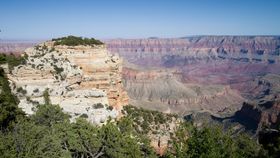


The Grand Canyon has a twin, only it lives on the other side of the world. That is according to a paper recently published in the journal Geology.
Geologists at Monash University in Melbourne were curious about a series of rock formations in Tasmania, Australia, that looked suspiciously similar to those in the Grand Canyon, Arizona in the US – according to study author, Jack Mulder, the rocks have always looked a little out of place.
Now, chemical testing has confirmed it is a match. The pair each contain minerals with identical geochemical fingerprints.
The team based their conclusion on the rocks' similar stratigraphy, depositional age, and detrital zircon U-Pb age distribution and Hf isotope composition. The results suggest these ancient rock formations were once one and the same – and that could have major geological implications.
"We concluded that although it’s now on the opposite side of the planet, Tasmania must have been attached to the western United States," Mulder told New Scientist.

Today, the planet is split into seven continents but this wasn’t always the case – and it won't stay this way forever. Scientists think the next time all seven continents re-join will be in the next 50 million to 200 million years and they have already named this supercontinent Amasia.
There have been several supercontinents in Earth's history, the most famous (and most recent) being Pangea. But before that, 1.3 billion to 750 million years ago, there was Rodinia.
Rodinia broke up into smaller continents hundreds of millions of years ago, coinciding with a period of extreme global cooling that probably wasn't all that coincidental. But figuring out how exactly today's continents could fit together to form a Rodinia-like landmass has proved to be a challenge.
The Grand Canyon's twin could help solve a small piece of that puzzle, providing evidence that 1.1 billion years ago, modern-day Australia and the western coast of North America were attached.
Alan Collins, a professor of earth sciences at the University of Adelaide, Australia, has gone as far as to tell New Scientist the paper shows Tasmania "holds the key" to stitching together the tectonic geography of the time, saying it could help future geologists build full plate models of ancient Earth.
[H/T: New Scientist]