Nature
 PUBLISHED
 19
19




It can be hard to imagine a silver lining to the all-consuming cloud that is the current and ongoing spread of SARS-CoV-2 across the planet, but, as cities and lives are pulled to a standstill by communicable disease, our skies and rivers are revealing an unexpected positive to the pandemic. While the beneficial effects for our environment by no means reduce the anguish and suffering caused by such an outbreak, economic slowdown and reduced travel as a result of government-enforced quarantines has put a dramatic cap on outgoing pollution and the effects are being seen all over the world.
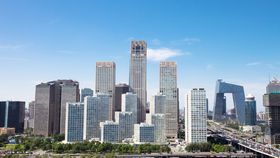
The first example was seen at the point of origin of COVID-19 in China, where the outbreak began in December 2019, as quarantines across the country pulled vehicles from the roads. In Wuhan, many locals under lockdown praised the return of blue skies to the usually smog-laden city, where air pollution has been a concern to public health.
The sanctions on travel and business eventually had an impact on pollution levels for the entire country, as satellite images captured by NASA showed a sustained decrease in nitrogen dioxide (NO2) over China since the beginning of this year. According to NASA, this effect is “at least partly” due to the economic slowdown that has resulted from the outbreak.
The same effect has now also been seen in Italy, the worst-hit country outside of China, which as of today has 24,747 confirmed cases while the death toll stands at 1,809. The subsequent lockdown has prompted a sharp decrease in NO2 as visualized in the below video by the European Space Agency (ESA) using data gathered by the Copernicus Sentinel-5P satellite.
The outbreak has even had an impact on Italy's waterways, as a recent video showed the dramatic transformation of the canals of Venice, which have become crystal-clear due to a sharp reduction in tourism. The absence of visitors and greatly-reduced traffic from boats and cruise ships due to Italy's quarantine measures mean fish can now be seen swimming in the clear canals.
Stanford University scientist and Earth Systems Professor Marshall Burke has used the emissions data for China to calculate what effect reduced pollution could have on the health of local residents, and found that the impacts of SARS-CoV-2 on our environment could potentially save more lives than it kills, detailing his calculations in a post on the interdisciplinary group Global Food, Environment, and Economic Dynamics, or G-FEED.
Professor Burke's calculations found that the reductions in harmful emissions could potentially contribute to saving the lives of 77,000 Chinese residents. He used data from US government sensors in Chengdu, Shanghai, Guangzhou, and Beijing measuring levels of PM2.5 (a particulate matter size of air pollutant) Burke mapped the drop in local pollution levels compared to previous years and used this to theorize the potential effect of pollution-related mortalities across the country.
“Putting these numbers together yields some very large reductions in premature mortality. Using the He et al 2016 estimates of the impact of changes in PM on mortality, I calculate that having 2 months of 10ug/m3 reductions in PM2.5 likely has saved the lives of 4,000 kids under 5 and 73,000 adults over 70 in China,” Burke writes.
“Using even more conservative estimates of 10% reduction in mortality per 10ug change, I estimate 1,400 under-5 lives saved and 51,700 over-70 lives saved. Even under these more conservative assumptions, the lives saved due to the pollution reductions are roughly 20 x the number of lives that have been directly lost to the virus.”
While his calculations are impressive, Burke is quick to lay out the limitations of his methods. His technique only considers PM2.5, just one of many emissions that contribute to air pollution. It also assumes that the air in resident’s homes is of better quality than that outside their front door, which isn’t necessarily the case in small homes burning biomass for cooking and heating. He also states that it would be “incorrect and foolhardy” to imply that pandemics are good for health, as any benefits to air pollution changes don’t account for the negative effects both in the short- and long-term of social and economic disruption that could “exceed any health benefits from reduced air pollution.”
Burke’s model highlights the substantial costs of poorly managed air pollution and the need to place greater importance on the quality of the air we breathe when global service resumes as normal at the close of this pandemic. Perhaps the dim light at the end of this long and distressing SARS-CoV-2 tunnel could be healthier environments in cities worldwide.