Humans
 PUBLISHED


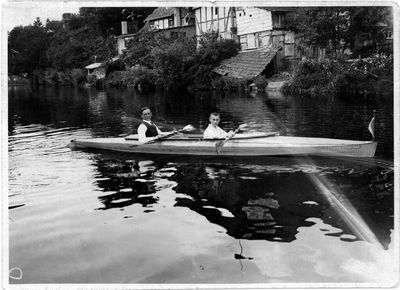


In September 1939, a man in a canoe paddled up to the shores of Thursday Island in the Torres Strait, Australia. If he looked a little worse for wear, you could forgive him — his voyage had begun seven years and four months ago on the other side of the planet, in Germany.
The rest of this article is behind a paywall. Please sign in or subscribe to access the full content.Oskar Speck holds the astonishing achievement of having travelled over 50,000 kilometres (31,068 miles) from Germany to Australia via canoe, traversing mainland rivers and continental coastlines, with only a minimal number of road journeys to bridge the necessary gaps.
Speck was born in 1907 near the city of Hamburg, according to the Maritime Heritage Association Journal. His early life collided with a tumultuous time in German history, first with the disastrous First World War, followed by the chaos of the Weimar Republic and the Great Depression.
In 1932, he found himself unemployed alongside millions of other Germans. With little left to lose, he decided to chase his two interests of geology and kayaking by travelling to Cyprus to find work in the copper mines.
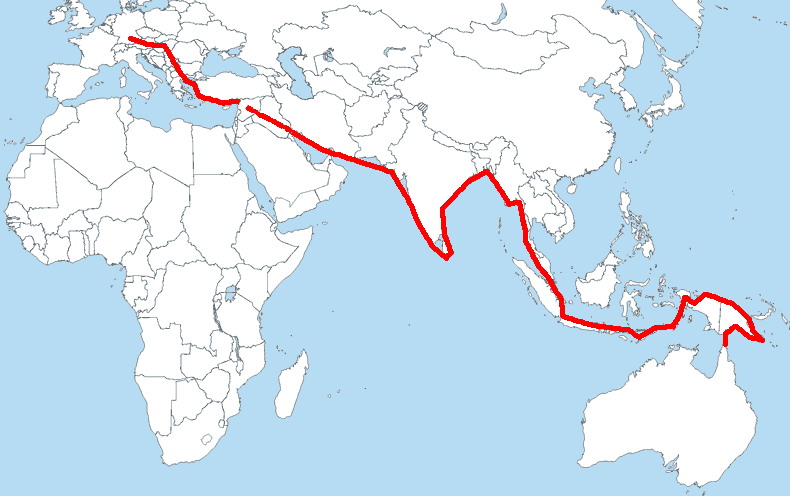
Undeterred by his inability to swim, the 25-year-old Speck boarded a bus from Hamburg to Ulm, where he began paddling the Danube River towards Yugoslavia, before making a short crossing to the Vardar River, which carried him down to the Mediterranean Sea.
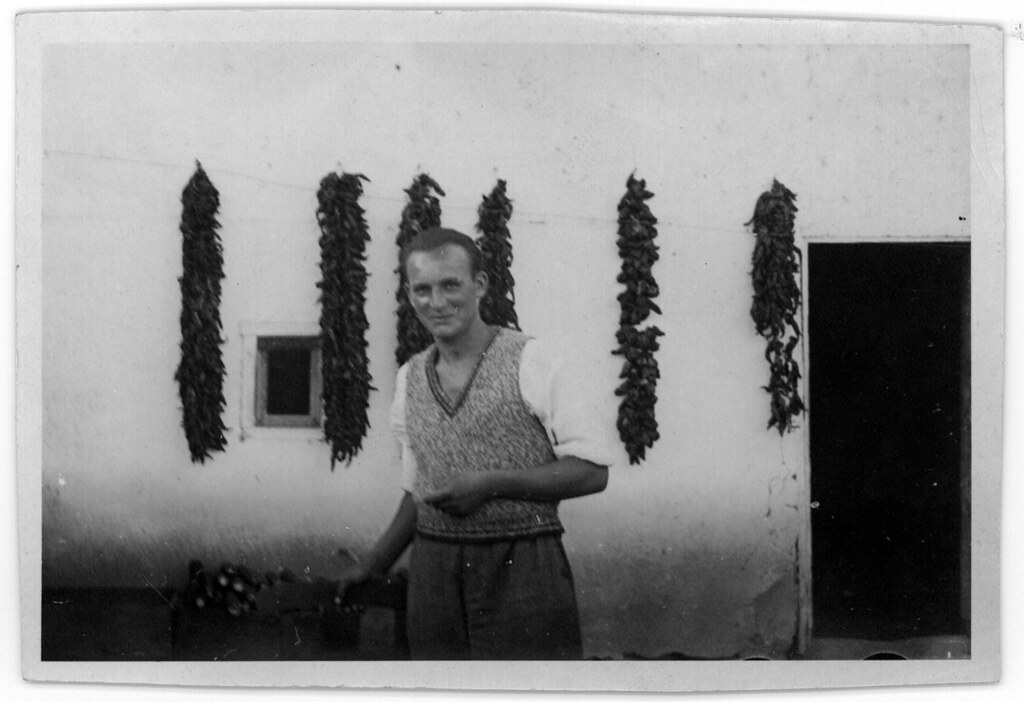
"Then the Danube started to get boring and I had heard that nobody had ever sailed down the Vardar in Macedonia before. So, I decided to paddle to Skopje in Macedonia and become the first," he reportedly said in a 1987 interview with SBS journalist Margot Cuthill.
Upon reaching the port city of Thessaloniki in Greece, he began to sail around the Greek islands and made it to Cyprus. However, by then, his plan to settle there had lost its original allure.
"I wanted much more to make a kayak voyage that would go down in history. It was about now that I first said to myself, 'Why not Australia'? [...] That would be something!" he told the Australasian Post in 1956.
After his request to canoe through the Suez Canal was denied, he took his kayak overland to Syria and paddled the Euphrates River through West Asia to the Persian Gulf. This was an especially harsh leg of the journey. He reportedly didn't see a single person along the Euphrates for two weeks, surviving solely on wild dates plucked from the riverbanks.
Worse was still to come. Strong winds forced him to take refuge on a small island, with only a decomposing body washed ashore for company. His boat was then stolen and only returned after he bribed the corrupt policemen responsible.
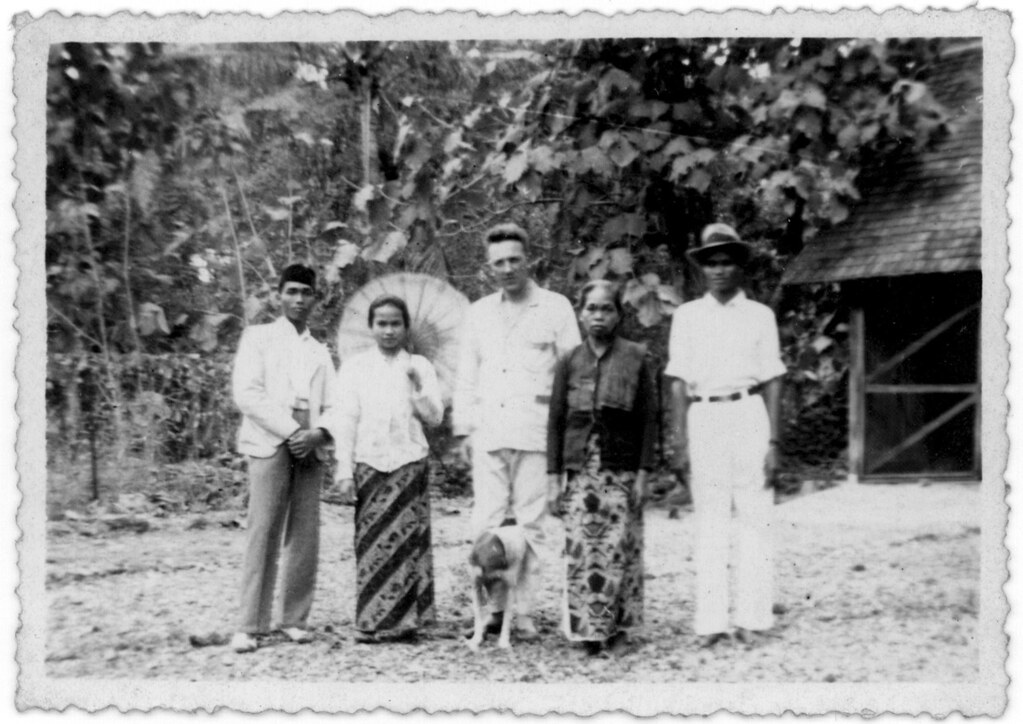
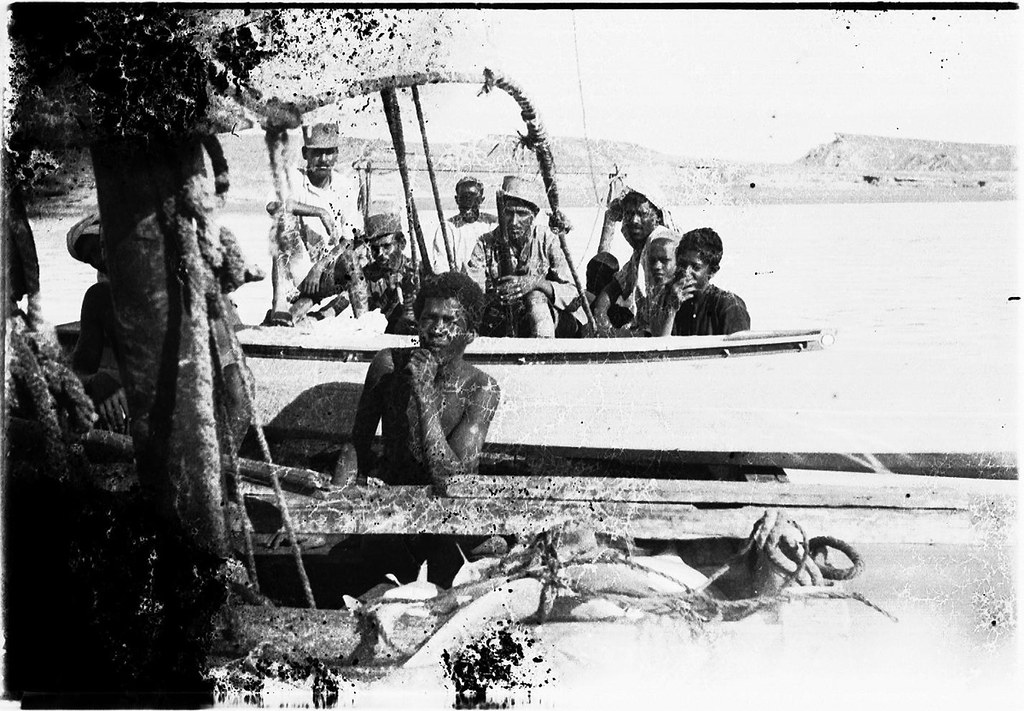
Eventually reaching the Persian Gulf, he sailed along the coastlines of modern-day Iran, Pakistan, India, Myanmar, Thailand, and Malaysia, before crossing through the Indonesian archipelago. Finally, he paddled around the islands of New Guinea, dodging sharks and crocodiles, until he arrived in Australia’s Torres Strait.
By the time he reached Australian shores in September 1939, the world he had traversed had changed. The Nazi Party had seized control of his homeland, and Europe was spiralling into the Second World War.
Speck was initially greeted warmly by locals on Thursday Island, before being promptly arrested by Australian authorities on suspicion of being a German spy.
“Well done, feller!” the policemen said, shaking his hand. “You’ve made it — Germany to Australia in that. But now we’ve got a piece of bad news for you. You are an enemy alien. We are going to intern you.”
It must be noted that Speck did have some association with Nazism beyond his German passport, which had been lost somewhere along the journey. Archival photographs show that his boat flew a sail bearing the Reich and National Flag — emblazoned with a swastika — at certain points during the journey. That said, he is reported to have disliked the Third Reich's attempts to co-opt his achievements as a symbol of German heroism, and those who knew him personally claimed he was no Nazi.
Speck's internment began at a prisoner-of-war camp on Thursday Island, where he was held for a month before being transferred to Brisbane. From there, authorities moved him to the Tatura Internment Camp in Victoria, from which he managed to escape. However, he was soon recaptured and relocated to Loveday Camp 14 in South Australia, where he remained until the war's end.
His experience in Australia did little to dampen his affection for the country, however. With the war over and the Third Reich consigned to the dustbin of history, he was released and went on to establish a successful opal-cutting business.
Speck lived in Australia until his death in 1993, at the age of 86. He received little fanfare or recognition for his achievement, but he died content.
"I am satisfied. Recognition or no recognition,” he wrote in his last letter to his sister, Greta.
"We have a strange situation, one of the most difficult world records to this day and it will still be in a hundred years and wholly unknown. But I am satisfied. The war interfered much more with millions of fates. Why shouldn't I be satisfied?"



 4
4