Ad

humans-iconHumans
clock-iconPUBLISHEDOctober 10, 2023
comments icon17
share780

Listen To The Sounds Of Ancient Languages Brought To Life By AI

Ever wondered what ancient languages sounded like?

James Felton headshot

James Felton

James Felton headshot

James Felton

Senior Staff Writer

James is a published author with multiple pop-history and science books to his name. He specializes in history, space, strange science, and anything out of the ordinary.

Senior Staff Writer

James is a published author with multiple pop-history and science books to his name. He specializes in history, space, strange science, and anything out of the ordinary.View full profile

James is a published author with multiple pop-history and science books to his name. He specializes in history, space, strange science, and anything out of the ordinary.

View full profile
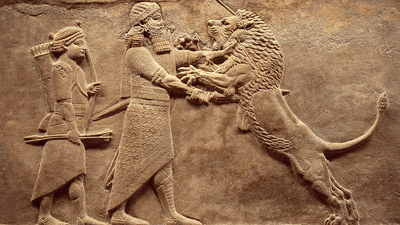
An engraving of a man fighting a lion.

Ancient Sumerian is among the languages recreated by artificial intelligence.

Image credit: Viacheslav Lopatin/Shutterstock.com.


Ever wondered what ancient languages sounded like? Well, wonder no more, for a video series made using artificial intelligence (AI) can show you.

The rest of this article is behind a paywall. Please sign in or subscribe to access the full content.

The videos are created by YouTube channel Equator AI, which states that it strives "to preserve and revive the past of mankind, making it closer and more understandable for people of our era.” The videos demonstrate Old English, Akkadian, Sumerian and Old Chinese, among many others.

Of particular note, at least to English speakers, may be how different Old English is from modern English. This is partly due to what is known as the Great Vowel Shift. From the 15th to 18th century, English speakers began to pronounce their long vowels differently, making Old and Middle English sound pretty alien to modern English speakers.

Couple this with structural and grammatical changes to the language in Old English, a Germanic language, and you'd find it difficult to understand the gist of the conversation if you somehow arrived in the 12th century. But it is, along with Sanskrit and Aramaic, quite interesting to listen to.



Written by 

Add us as a Google preferred source to see more of our
trusted coverage in Search