Humans
 PUBLISHED
 2
2


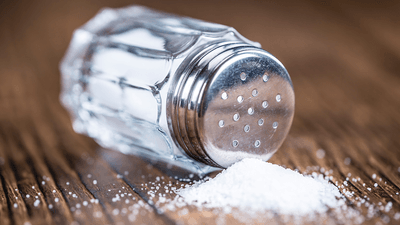


Every now and then, someone on the Internet discovers a "hidden" feature of an everyday utensil – such as toasters – and minds, as they say, are blown.
Now, a viral post going around the Internet shows a use for the ridges you see at the bottom of salt shakers. According to the post, the ridges are there to be scraped in order to improve the flow of salt.
People were, of course, blown away by the hack for pouring a frankly alarming amount of salt onto your food without having to go through the effort of shaking. Others, however, were skeptical that this was the intended purpose of the ridges, rather than a neat side effect.
In all likelihood, the trick isn't what the ridges were designed for, especially as plenty of other glass bottles and jars have these ridges along the bottom, and not much will happen when you scrape the bottom of a Coke bottle with a spoon.
One plausible explanation posted to Quora by someone claiming to be a commercial glass contractor is that they are there to prevent glass objects from sliding off a table.
"As a cold glass sits in a room temperature environment, the glass begins to collect condensation. This condensation tends to slide down the side of the glass and collect at the base of the glass," Buster Ecks wrote on Quora, adding "well if you put the glass on a flat smooth surface, the condensation will collect underneath the glass creating a layer of water between the glass and surface of the table."
This may also may not be the main purpose for the ridges. As pointed out by Twitter user GussterMolly, the "knurls", as they are known, help prevent breakage.
"During normal handling of bottles, damage generated in the bearing surface is usually confined to the tips of the knurls. In these situations, glass surface strength is reduced but is concentrated at a location where the stress indices are very low for both internal pressure and heel impact," Dr Wenke Hu from American Glass Research explained in a study.
"This is one of the main purposes of placing knurls on the bearing surface of glass containers – to concentrate unavoidable damage in regions where tensile stresses are significantly reduced. The positive result is that breakage is typically averted."
Nevertheless, a side effect of preventing glass smashage is that you can scrape salt into your food at alarming speed.