Technology
 PUBLISHED
 4
4


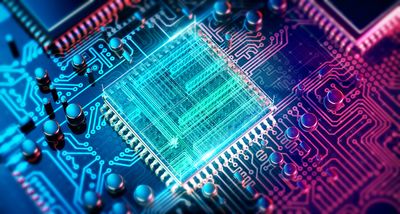


Using a photonic quantum computer chip, researchers from Xanadu, Toronto, have absolutely obliterated the current fastest computers and algorithms in completing a tricky sampling problem. According to their paper, published in Nature, it would take supercomputers and algorithms around 9,000 years to compute – their quantum chip Borealis smashed through it in just 36 microseconds.
This decade is truly shaping up to be the age of quantum computers. An increasing number of chips and solutions are proving to be able to solve tasks faster than traditional computers, and even solve tasks that are entirely out of the scope of current machines. One such task is Gaussian boson sampling (GBS).
Boson sampling is a task requiring the computer to generate a sample from the probability distribution of single-photon measurements at the output of the circuit – if that sounds like complete gibberish, you’d be right, as it is essentially impossible for even our fastest supercomputers to understand too.
Owing to a few advantages in BGS making it non-discriminatory towards certain quantum setups, BGS has become a staple benchmark to calculate how much faster a given quantum chip is over its traditional counterpart.
Quantum computers expand on traditional computers by being able to process three units of data instead of two – while current computers use binary (0 being “off” and 1 being “on”), quantum computers use qubits (0, 1, and “both”). They are significantly faster by computing the probability of each solution before using it, allowing an advantage over current machines that must run through each solution to identify whether it is true or false.
Borealis, Xanadu’s aptly-named photonics quantum chip, uses sequential bursts of light to transmit quantum information. It is a beast of a chip, containing up to 219 qubits, with 129 utilized in this research. The researchers believe that photon-based quantum chips will be the most likely architecture to be utilized going forward, as they are typically more scalable than other solutions.
The Borealis chip is particularly advanced in that each quantum gate is programmable, and while other chips have also employed this functionality, they have yet to achieve quantum supremacy (outperforming traditional computers).
The researchers believe this work is a huge milestone in pushing forward quantum chips.
“This work is a critical milestone on the path to a practical quantum computer, validating key technological features of photonics as a platform for this goal,” write the authors.
While it is all extremely promising, quantum computers have a long way to go. GBS has no practical applications and finding a practical use for quantum chips in their current form is difficult. The UK Ministry of Defence has recently purchased its first quantum computer for testing, but it may still be many years before such computers are deployed at scale.