Nature
 PUBLISHED


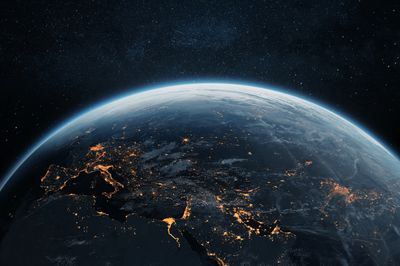


The inner movements of our planet are hard to study. But what goes on thousands of kilometers beneath our feet influences earthquakes, tsunamis and volcanoes on the surface.
Scientists have now discovered six mysterious structures at the boundary between the core and the mantle that might have a key role to play in these events.
The structure of the Earth is largely split into three parts. In the center is an iron core, which is extremely viscous and not entirely solid. Around this is wrapped a thick layer of semi-solid rock known as the mantle. Finally, this is encased within the relatively thin crust, which is the ground on which we stand.
The deepest hole ever drilled
What goes on deep within the Earth is of intense interest to scientists as its effects ripple out to influence what is going on in the crust. But studying these deep layers is exceedingly difficult.
The deepest that anyone has ever drilled is the Kola Superdeep Borehole. Created during the Cold War by the Soviet Union, it descended a staggering 12,263 meters (40,230 feet) down into the Earth.
To put this into context, the deepest natural point on the planet is the Mariana Trench at around 11,034 meters (36,201 feet).
The hole took two decades to drill, and was abandoned not long after the fall of the Iron Curtain. But despite this extraordinary achievement, the Kola Superdeep Borehole is still only thought to have reached perhaps a third of the way through the Earth’s crust.
Understanding what is going on any deeper requires a different approach.
The guts of our planet
To try and figure out what is going on at the point where the core meets the mantle around 2,900 kilometers (1,800 miles) beneath our feet, scientists in China looked to study seismic waves.
In particular, they were interested in a type of wave known as PKP precursors.
“This boundary is crucial for heat transfer and material cycling inside the planet, yet its fine-scale details remain poorly understood,” the authors write.
“A special type of seismic wave, known as PKP precursors, gets scattered and deflected by small heterogeneities [inconsistencies] sitting just above this boundary, making these waves useful probes of hidden deep-Earth features.”
The problem is finding evidence of these precursors. To do this, the team used machine learning to look through over 2 million earthquake recordings taken over the last 35 years.
This identified approximately 175,000 recordings, which is about 10 times as many PKP signals that have been identified in all previous studies combined. By looking at these waves together, they were suddenly able to see a pattern emerging.
“Whereas previous studies could only identify sparse, isolated patches sampled by precursors, our results reveal that these potential heterogeneities may extend across broad regions in the form of continuous bands,” the authors continue.
“We also discovered six areas that likely host significant heterogeneities that had never been documented before, providing clear priority targets for future exploration of Earth's deep interior.”
They had discovered at least 6 points at the boundary where the core meets the mantle that are scattering these PKP waves. While they are unable to say what, exactly, these structures are, they do provide a new target for study.
The hope is that by understanding what these structures are, and how they influence the movement of seismic waves through our planet, we'd gain better information about devastating events such as earthquakes and volcanoes.
The study has been published in the journal JGR Solid Earth.