Nature
 PUBLISHED




The evolution of flight in insects has seen them take to the skies at incredible sizes and speeds – we’re looking at you, Megaloptera (appropriately enough meaning "large wing"). Flying requires creating lift and for that, you need molecules in the air, something that gets less concentrated the higher up you go. It got us wondering, what’s the highest an insect can fly?
The rest of this article is behind a paywall. Please sign in or subscribe to access the full content.The answer is split into two: the highest we’ve found a flying insect, and the highest we’ve proven an insect could theoretically fly. After all, just because a bee doesn’t want to summit Everest doesn’t mean it couldn’t.
The Guinness World Record for highest flying insect is held by the tortoiseshell butterfly species Aglais urticae. These migrating butterflies have been seen flying over the Zemu Glacier in the eastern Himalayas at an eye-watering altitude of 5,791 meters (19,000 feet). Were they the mountaineering kind they could almost top Kilimanjaro with that talent, but there’s another insect out there theoretically capable of summiting the Roof Of The World.

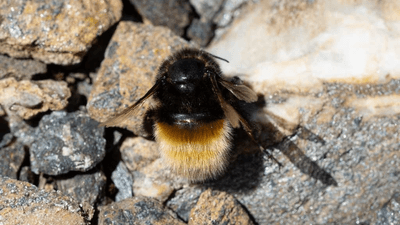
A group of scientists in Rilong, China, captured male Bombus impetuosus bees at an elevation of around 3,250 meters (10,663 feet) and popped them inside a Plexiglas flight chamber. They then adjusted the barometric pressure within the flight chamber using a hand pump to see how it affected their capacity to hover, which was demonstrated by making controlled, vertical ascents inside the tube.
They did this at regular intervals to assess maximum flight altitude, revealing that the bumblebees could hover at the equivalent air pressure you’d find at an altitude of 9,000 meters (29,528 feet). That’s over 100 meters (328 feet) above the peak of Mount Everest.

For migrating species like our tortoiseshell butterfly, it’s perhaps less surprising that they might be captured at great heights because it’s possible their annual journey is facilitated by ambient winds. A foraging critter like the humble bumble might therefore be a less likely candidate for flight at such a height, but B. impetuosus tells us otherwise.
“The extreme flight performance under hypobaria documented here is unexpected and suggests that routine hovering, while aerodynamically challenging, should not be viewed as an upper bound to aerial performance,” concluded the study authors.
So, we’ve established they’re good in the air, but how long can insects live?