Space and Physics
 PUBLISHED



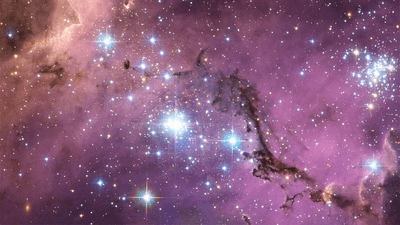


Astronomers pointing the Dark Energy Camera (DECam) at a nearby satellite galaxy have spotted a mystery object passing between us and one of its stars, with the unusual event lasting for around an hour. While it might be a rogue planet, the authors of a new paper favor a far more exotic explanation; that the object may have been created in the first few moments of our universe.
The rest of this article is behind a paywall. Please sign in or subscribe to access the full content.When looking for exoplanets, modern astronomers have a range of options, including looking for dips of light when the planet passes in front of its host star from our perspective, or looking for telltale "wobbles" of stars caused by the planet's gravitational tug on its host. When it comes to free-floating planets (FFPs), sometimes dubbed "rogue planets", options are far more limited. We're stuck with direct imaging, or the far more effective method of gravitational microlensing.
"Gravitational lensing is an observational effect that occurs because the presence of mass warps the fabric of space-time, sort of like the dent a bowling ball makes when set on a trampoline," NASA explains. "The effect is extreme around very massive objects, like black holes and entire galaxies. But even stars and planets cause a detectable degree of warping, called microlensing."
When the star or planet in question sits between us and something else out there in space, this warping acts like a lens and magnifies the light coming from the more distant object. This potentially allows us to detect the presence of the lensing object when we might not otherwise have known it was there.
The team behind the latest study, which is not yet peer reviewed, was interested in the discovery of rogue planets but also looking for hypothetical objects known as primordial black holes (PBHs). These are hypothetical black holes that could have formed in the first few seconds of the universe, when all the dust and gas that would go on to create the stars and galaxies was more tightly packed together.
So far we have not found adequate evidence that primordial black holes exist. But by pointing DECam at the Large Magellanic Cloud (LMC), a nearby satellite galaxy of the Milky Way, this team believes they may have found a decent candidate within our own galactic halo.
"Gravitational microlensing is known as a productive method for exoplanet discovery and characterisation, but also provides an experimental avenue to constraining the PBH abundance," the team writes in their paper. "Here, we report the discovery of a one hour-long microlensing event. An optical depth probabilistic analysis indicates that the lensing object, which we refer to as Phoebe, is 5 orders of magnitude more likely to be part of the Milky Way’s dark matter halo than part of the stellar content of the Milky Way and Large Magellanic Cloud."
According to the team, "Phoebe" passed between us and a star in the LMC, causing it to brighten slightly in an event that lasted around an hour. The tricky part is figuring out exactly where the object is. If it is part of the LMC, that would imply it was a large object – perhaps a free-floating planet, or a planet in a very wide orbit – with a mass of around 0.1 solar masses. For context, Jupiter is around 0.000954588 solar masses.
If confirmed, that would be an incredible discovery, representing the first extragalactic microlensing exoplanet. But the team suggests another option, that Phoebe is a lot smaller, at around three times the mass of our Moon, and within our galactic halo. If it is that close, it is far smaller than models of stellar black holes will allow, but it could be a good candidate for a primordial black hole, which has often been touted as a potential explanation for dark matter.
"Based on a comparison of the optical depths of the three galactic models, it is far more likely that Phoebe belongs to the dark matter density and, hence, is the best candidate for a PBH," the team writes in their paper, adding, "with the set of short-timescale microlensing events in the dark halo, there is enough motivation to seriously consider a population of low-mass black holes, as predicted by Carr & Hawking."
While interesting, we don't want you to go away thinking that primordial black holes have been confirmed. Far more work would need to be done for that to be the case, including finding more similar objects, potentially also within our galactic halo. Nevertheless, the team finds that the object is five orders of magnitude more likely to be part of our galaxy, favoring the PBH explanation, than part of the Large Magellanic Cloud.
"Phoebe suggests a population of compact, lunar-mass objects associated with the dark matter distribution of the Milky Way," the team adds, "and potentially opens a new window to the physics of inflation."
The study is posted to pre-print server arXiv.